
From a Dusty Attic to a Global Village: 100 Years Since the First TV Transmission
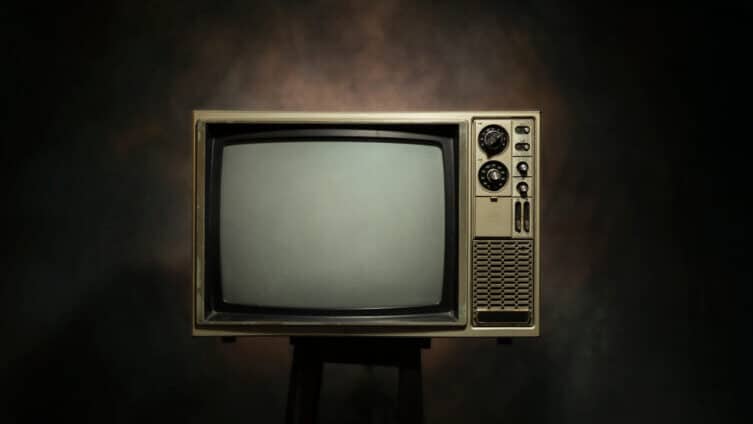
In January 1926, inside a cramped laboratory in London’s Soho district, a Scottish inventor named John Logie Baird huddled over a contraption of bicycle lenses, knitting needles, and sealing wax. To a small group of scientists from the Royal Institution, the flickering, orange-tinted image of a ventriloquist’s dummy named “Stooky Bill” looked like a technical curiosity.
Search billions of historical records
Uncover your family story through historical records


They did not realize they were seeing the start of a medium that would change how people shared information, imagined distant places, and stayed connected across borders. A century later, the first television demonstration still matters for family history because it shaped culture, migration, and the way families preserved identity across generations.
Key takeaways on how TV shaped family history
- Baird’s 1926 demo helped launch mass broadcasting that later connected people to events and cultures far beyond their local communities.
- Television influenced migration for many families by showing lifestyles abroad and shaping where people hoped to build a future.
- TV strengthened diaspora connections while accelerating cultural blending, affecting language, customs, and identity within family lines.
From mechanical experiments to moving images
Television did not appear fully formed in Baird’s Soho laboratory. It was the culmination of decades of experiments with light, electricity, and motion. In the late 19th century, German engineer Paul Gottlieb Nipkow patented a scanning disk: a device that consisted of a rotating disk with a spiral pattern of holes that could break an image into lines for transmission. By the early 1920s, inventors were exploring ways to use Nipkow’s concept to transmit moving pictures. John Logie Baird, a Scottish engineer, built on this idea and began experimenting with mechanical television systems in London. He used everyday materials — including lenses, motors, and homemade components — to create a prototype that could convert light reflected from a subject into electrical signals and then back into an image.
On January 26, 1926, Baird gave the first public demonstration of television. He showed moving images of human faces to members of the Royal Institution in London using what he called the “Televisor.” This event is widely regarded as the first successful demonstration of a working television system capable of transmitting live, moving images with light and shade.
Although the picture was rudimentary and mechanical rather than electronic, this demonstration proved that televised moving pictures were possible and laid the technical foundation for later developments in electronic television, which offered clearer images and greater practicality.
Television as a“pull”factor
Before television, “elsewhere” often existed as imagination, a letter, or a newspaper description. TV added a visual layer that made distant places feel more real and more reachable.
As broadcasting expanded after World War II, television began showing images of suburban life, consumer goods, universities, and social change. For many viewers, especially younger ones weighing whether to stay or leave, this created a new kind of “pull factor.” The screen was not just entertainment. It was a repeated glimpse of another way of living.
For a young person in post-war Italy or a family in 1970s South Asia, destinations once described only in letters now had faces, accents, neighborhoods, and rhythms. Cities that had seemed abstract became familiar through weekly exposure.
Commerce and the rise of global work
Television also reshaped commerce. By helping brands communicate the same message across multiple countries, it supported the rise of multinational companies and a more visibly global economy. As corporate networks expanded, more people moved for work, training, and new career paths. In some family stories, the decision to relocate was influenced not only by economic necessity, but by a growing sense that opportunity abroad was tangible and attainable.
Television did not replace the economic and political forces that drive migration. But it changed how destinations were imagined — and imagination often shapes action.
Preserving and reshaping identity
Once families relocated, the same medium that had made distant places feel accessible began influencing how identity evolved in a new setting.
Television acted both as a bridge and as a pressure valve. Ethnic broadcasting and international programming allowed diaspora communities to hear their native language and see familiar traditions from thousands of miles away. In some households, this helped cultural practices endure longer than they might have in earlier migration waves.
At the same time, mainstream programming standardized speech patterns, fashion, and expectations about education and work. Broadcast accents influenced how younger generations spoke. Popular culture shaped aspirations and ideas about belonging. Television did not determine these changes, but it became part of the cultural environment in which they unfolded.
What this means for family historians
For genealogists, these shifts often leave subtle but visible traces.
A family that emigrated in the 1950s may continue giving children traditional names well into the next generation. Community affiliations — churches, social clubs, cultural associations — may remain active longer than expected. Oral histories may mention watching programs from the “old country” as a shared ritual.
At the same time, you may notice gradual shifts: names becoming more locally common, language use changing in official documents, marriage circles widening, or career paths reflecting new cultural expectations. In many family lines, the mid-to-late 20th century shows preservation and adaptation unfolding side by side.
How to trace migration in the television era on MyHeritage
If your family moved in the 20th century, you could often connect the “why” from family stories with the “what happened and when” from documents and timelines.
- Build a timeline in your family tree using what you already know. Add places and approximate years for moves, marriages, and births to see patterns across branches.
- Search passenger lists, naturalization files, censuses, and city directories in MyHeritage historical records to confirm dates, routes, and addresses.
- Look for cluster clues. Many migrations happened through networks: relatives, neighbors, or coworkers from the same hometown. Smart Matches™ can help surface connections that point to shared origins.
- Save the story, not only the facts. If a move was tied to work, education, or cultural change, add a short note to the person profile. These details help future relatives understand decisions, not just dates.
A century of connection
Looking back at Baird’s 1926 demonstration, it is clear his invention did more than transmit an image. Television helped spread ideas, aspirations, and shared reference points across continents.
Marshall McLuhan’s phrase “global village” captures something family historians recognize immediately. We are not isolated branches. We are connected lines shaped by movement, communication, and the stories families carried with them.
And while modern video calls are far beyond that first flicker, they carry the same basic promise: when someone leaves home to build a new life, connection does not disappear. It changes shape.
FAQs about television and family history
How did the first TV demonstration influence family migration?
Television offered a visual window into other places and lifestyles. Over time, those images may have strengthened “pull factors” by making opportunities abroad feel more concrete and familiar.
In what way can television serve as a genealogical time capsule?
Television preserved accents, fashions, social norms, and everyday settings that written sources cannot fully capture. Archival footage can provide valuable context for understanding the world your relatives lived in.
Did television help or hinder the preservation of immigrant heritage?
It did both. TV helped some families maintain language and cultural traditions through international and ethnic programming, while also encouraging assimilation through mainstream media.
How did global commerce on TV affect family professional histories?
Advertising and mass media supported the growth of global brands and multinational companies. That shift expanded job-related migration for some families, especially in the second half of the 20th century.
How has the “global village” concept affected modern family connectivity?
Today, families can maintain real-time visual links across borders, which helps sustain relationships across split branches. In that sense, modern video communication continues the story that began with early television. Yan Sandler is a passionate genealogy enthusiast, specializing in Eastern European and Jewish heritage. He enjoys helping others to uncover their roots, turning complex archival fragments into meaningful family stories for researchers worldwide.
Comments
No comments yet. Be the first!