
10 Belgian Surnames That Shaped European History
To most people, the names that embody European high royalty are Windsor, Bourbon, or Habsburg. Yet it is right here, at the crossroads of our provinces and our shared history, that the true architects of the continent’’s dynastic networks are hidden. Belgium may be a country of modest size, but for centuries, its nobility has dictated the tempo of European grand history.
Search billions of historical records
Uncover your family story through historical records


At first glance, our historic surnames bear the familiar imprint of local regions, evoking alder forests, hidden ponds, the hills of the Meuse, or simple clearings. But for those who know how to read between the lines of family trees, these Belgian names are true golden tickets to the highest spheres of global power. Through military exploits, unparalleled financial intuition, and masterful marriage alliances, these prominent families of ours shaped the European elite. Whether funding the rise of Monte Carlo, triggering the abdication of a King of the Netherlands, making their mark in the heart of Peruvian history, or permanently embedding our DNA into modern royal successions, here are 10 Belgian family names that wrote the history of European aristocracy.
Merode
The surname de Mérode is a toponymic name tracing its roots to Merode, Germany. Linguistically, it derives from ancient Germanic words where “mer” means “lake” or “pond” and “rode” means “to clear,” evoking a cleared area near a lake.
The House of Merode is one of the most prominent families of the Belgian nobility. Establishing itself in the Low Countries in the fourteenth century via the marriage of Richard I de Mérode to Margaretha van Wesemael, the house consolidated its power within the Belgian high aristocracy through major royal alliances. In 1846, Antoinette de Mérode married Prince Charles III of Monaco, providing the dowry that funded Monte Carlo. Additionally, Louise de Mérode’s daughter, Maria Vittoria dal Pozzo, married Prince Amedeo of Savoy, Duke of Aosta, who briefly reigned as King of Spain from 1870 to 1873.
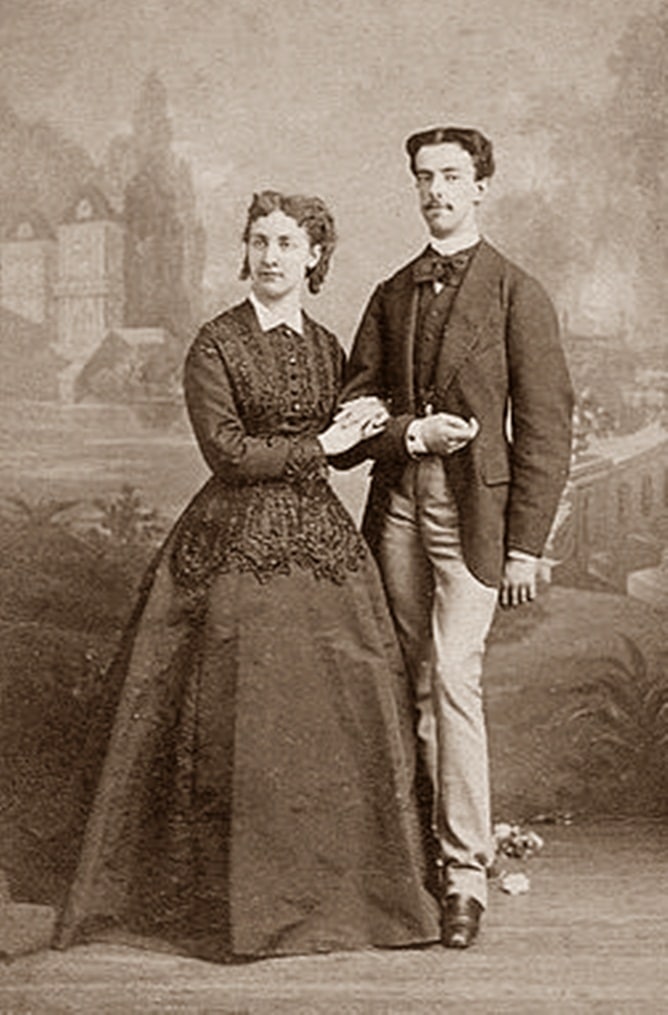
Amadeo of Savoy with his first wife Maria Vittoria dal Pozzo
This line descends directly to Prince Lorenz, Archduke of Austria-Este, whose marriage to Princess Astrid of Belgium embedded the de Merode ancestry into the current Belgian royal succession.
Ligne
The surname de Ligne is a toponymic name originating in the twelfth century from the village of Ligne in the County of Hainaut, Belgium. Linguistically, it derives from the Old French ligne, meaning “line” or “stripe,” which likely referred to a geographic boundary line or the nearby Ligne river.

Portrait of Albert de Ligne, Prince of Barbancon and Arenberg, painted in 1625–1635 by Anthony van Dyck
The House of de Ligne has secured prominent alliances with both reigning and non-reigning dynasties. In 1950, Prince Antoine de Ligne married Princess Alix of Luxembourg, closely integrating the house with the Grand Ducal Family of Luxembourg. Among non-reigning royal lines, the current head of the house, Michel, 14th Prince of Ligne, is married to Princess Eleonora of Orléans-Braganza, a direct descendant of both Emperor Pedro II of Brazil and King Louis Philippe I of France.
Lannoy
The surname Lannoy is a toponymic name derived from the village of Lannoy near Lille, located in French Flanders. Etymologically, the name is linked to the French l’aune, meaning “the alder tree” (signifying a place of alder trees or forest clearings). Emerging from the thirteenth-century nobility of Hainaut and Flanders, the family bore a distinctive coat of arms featuring three crowned green lions on a silver field. The house rose to immense historic prominence under the Holy Roman Empire when Charles de Lannoy commanded the imperial forces at the 1525 Battle of Pavia, capturing King Francis I of France. The exploit earned him the title of Imperial Count and Prince of Sulmona.
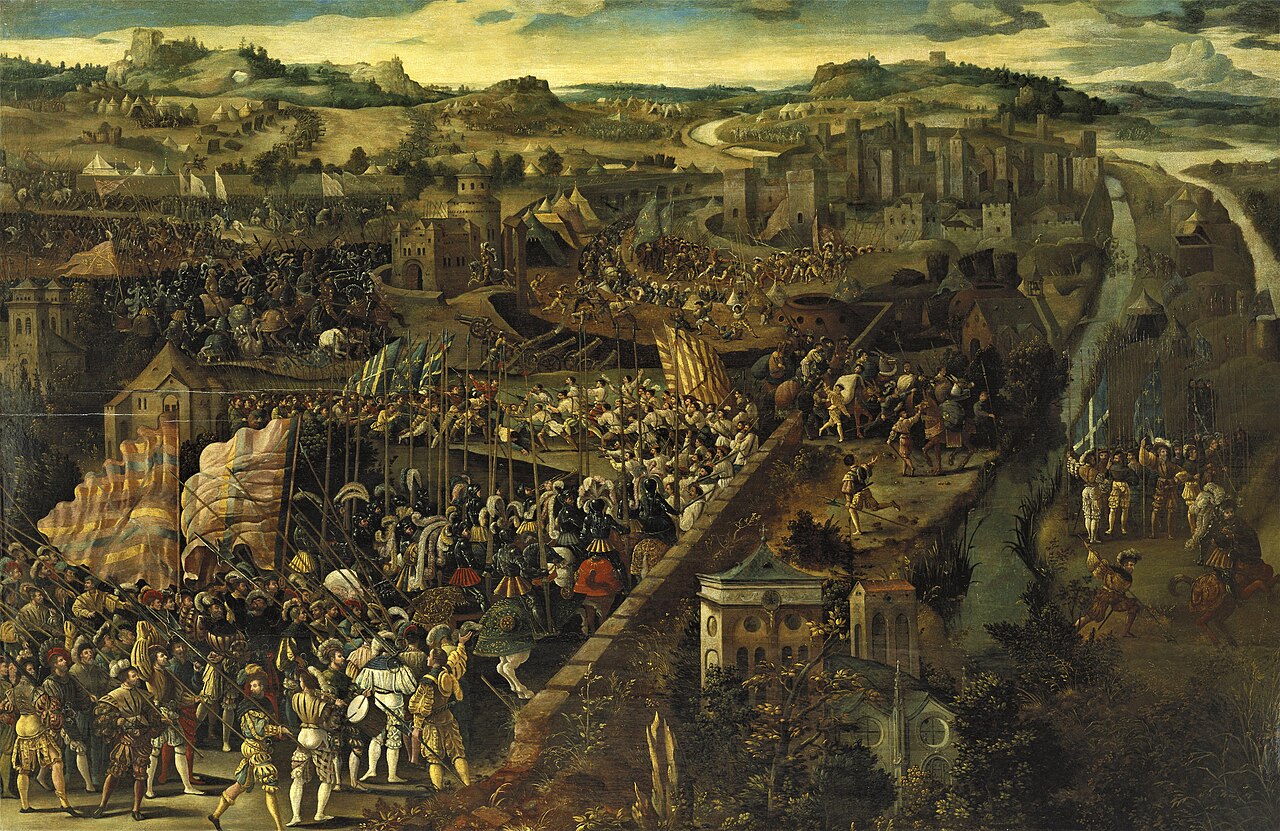
Painting of the Battle of Pavia
In contemporary history, the House of de Lannoy secured its most prestigious royal alliance through the reigning Grand Ducal House of Luxembourg-Nassau. In 2012, Countess Stéphanie de Lannoy married Hereditary Grand Duke Guillaume of Luxembourg. Through this union, the de Lannoy bloodline is directly integrated into the sovereign succession of Luxembourg, with her children, Prince Charles and Prince François.
Oultremont
The surname Oultremont is a toponymic name tracing its lineage to the medieval nobility of the Bishopric of Liège and the region of Huy. Etymologically derived from the French outre-mont, the name translates literally to “beyond the mount,” a topographic reference indicating the family’s original ancestral seat situated on the opposite side of the Meuse hills.
The house d’Oultremont’s most notable royal alliance occurred with the reigning House of Orange-Nassau of the Netherlands, sparking a major nineteenth-century political crisis. Countess Henriette d’Oultremont de Wégimont, a Roman Catholic Belgian and lady-in-waiting to Queen Wilhelmina of the Netherlands, and became the romantic focus of King William I of the Netherlands.
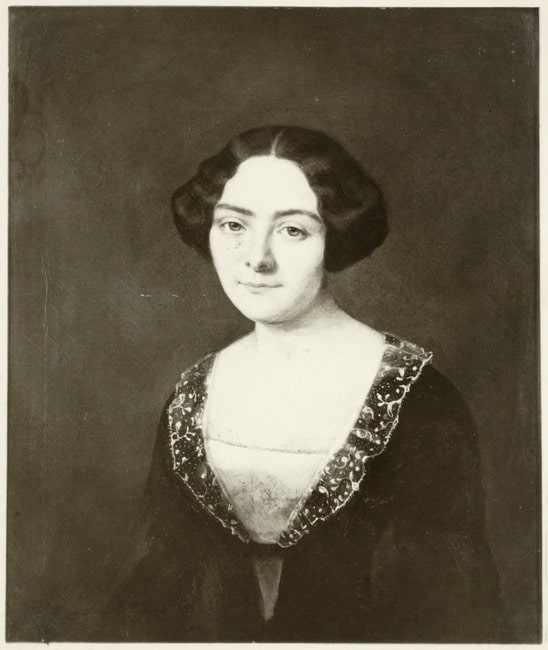
Henriette d’Oultremont
Because the union occurred shortly after the Belgian Revolution of 1830, intense Protestant opposition forced King William I to abdicate his throne in October 1840. The couple married morganatically in Berlin the following year, with Henriëtte styled as the Countess of Nassau rather than Queen.
Arenberg
The surname Arenberg is a toponymic name originating from the Eifel region of Germany near Ahrweiler, derived from the mountain and castle of Arenberg. Etymologically, the name translates to “Eagle’s’s Mountain,” combining the Germanic elements aren (eagle) and berg (mountain or hill), symbolizing strength and nobility. The modern lineage was established in 1547 when Jean de Ligne, Baron of Barbançon, married Marguerite de La Marck, the heiress to the sovereign territory.
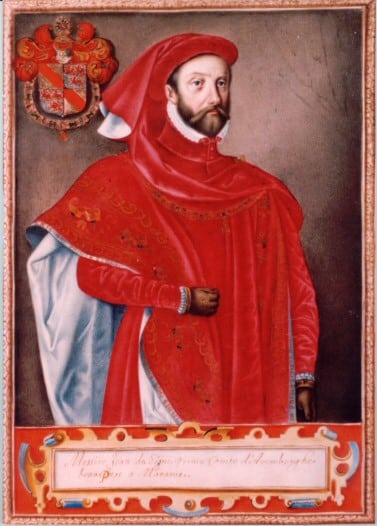
Jean de Ligne
This union established the House of Arenberg as a powerful branch of the House of Ligne, and they were officially elevated to Dukes within the Holy Roman Empire in 1644. Even after losing their independent territory during the Napoleonic Wars, the family managed to retain their premier royal status — meaning they were legally recognized as social equals to reigning kings and emperors, allowing them to continue marrying into Europe’s highest royal families.
Historically aligned with the Spanish and Austrian Habsburg crowns during their administration of the Low Countries, the family’s elite status was formally solidified in Belgium when they were recognized as princes in 1953, with the head of the house confirmed as a Belgian Duke in 1994. Among its major alliances with non-reigning royal families, the house formed a prestigious dual connection to the Royal House of Bavaria (Wittelsbach) and the Grand Ducal House of Luxembourg. This occurred in 1955, when Jean-Engelbert, 12th Duke of Arenberg, married Princess Sophie of Bavaria, the daughter of Crown Prince Rupprecht of Bavaria and Princess Antonia of Luxembourg.
Riquet de Caraman-Chimay
The surname Riquet de Caraman-Chimay is a composite name of French and Belgian origin. Linguistically, “Riquet” originates from the Occitan and Old French regions, traditionally used as a nickname meaning “curly” or “curly-haired,” while “Caraman” and “Chimay” are toponymic additions representing principalities the family acquired in France and Hainaut (Belgium). The family’s noble ascent began with Pierre-Paul Riquet, the brilliant 17th-century engineer who built France’s famed Canal du Midi. By the nineteenth century, the family had secured sovereign princely status within the Holy Roman Empire, a prestige later recognized by an 1889 Belgian royal decree that permitted all male members of the house to bear the title of Prince de Caraman-Chimay.
In 1830, Joseph de Riquet de Caraman married Émilie Pellapra, who was widely known and publicly claimed to be the illegitimate daughter of Emperor Napoleon I. Their granddaughter, Élisabeth de Riquet de Caraman-Chimay (the Countess Greffulhe), became a celebrated icon of Belle Époque Paris and the primary inspiration for Marcel Proust’’s famous literary character, the Duchess of Guermantes.
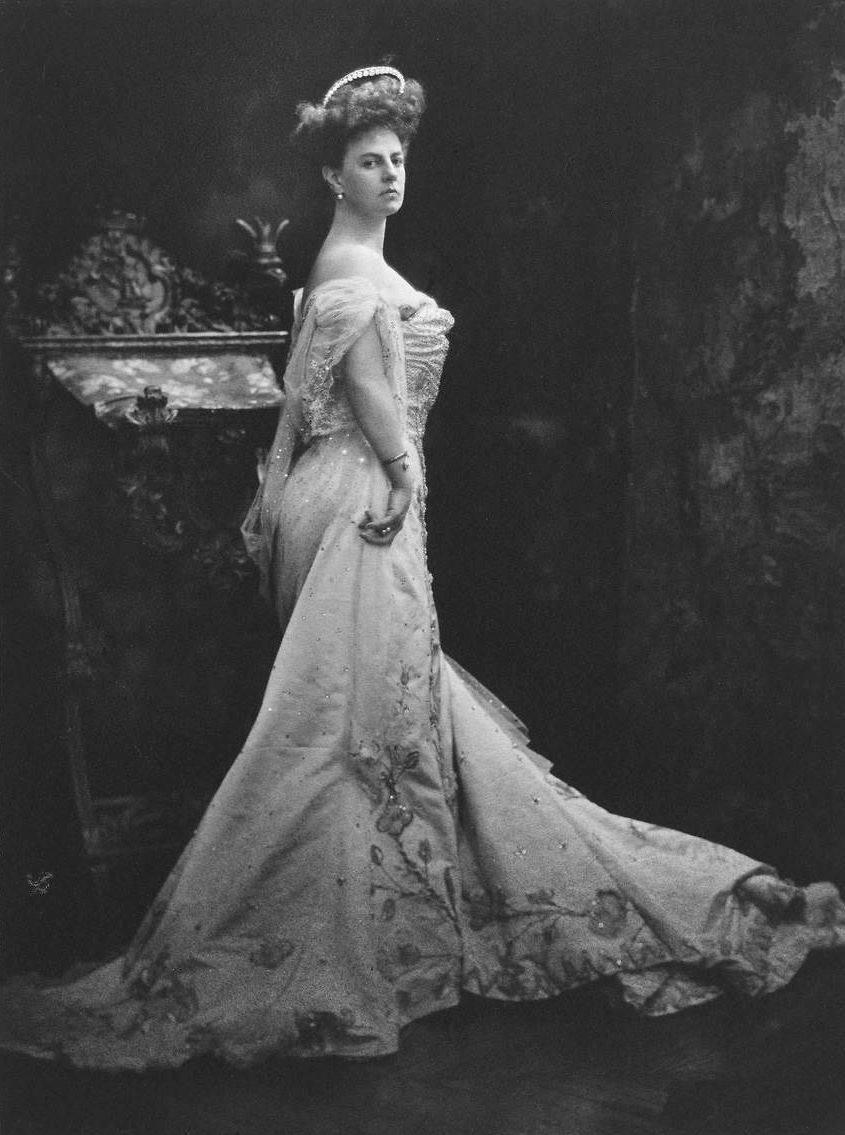
Élisabeth de Riquet, countess of Caraman-Chimay
Maintaining the family’’s deep historical roots within the Belgian court, Élisabeth’’s sister, Princess Ghislaine de Caraman-Chimay, served as a prominent lady-in-waiting to Queen Elisabeth of Belgium.
Looz-Corswarem
The surname Looz-Corswarem combines two historical Belgian roots. “Corswarem” comes from an ancient knightly family from the Hesbaye region, while “Looz” was added to show their descent from the powerful medieval Counts of Looz. The family was elevated to Dukes within the Holy Roman Empire in 1734. Even after losing their independent territory during the Napoleonic Wars, they kept their premier royal status — meaning they were legally recognized as social equals to reigning kings and emperors, allowing them to continue marrying into Europe’s highest royal families.
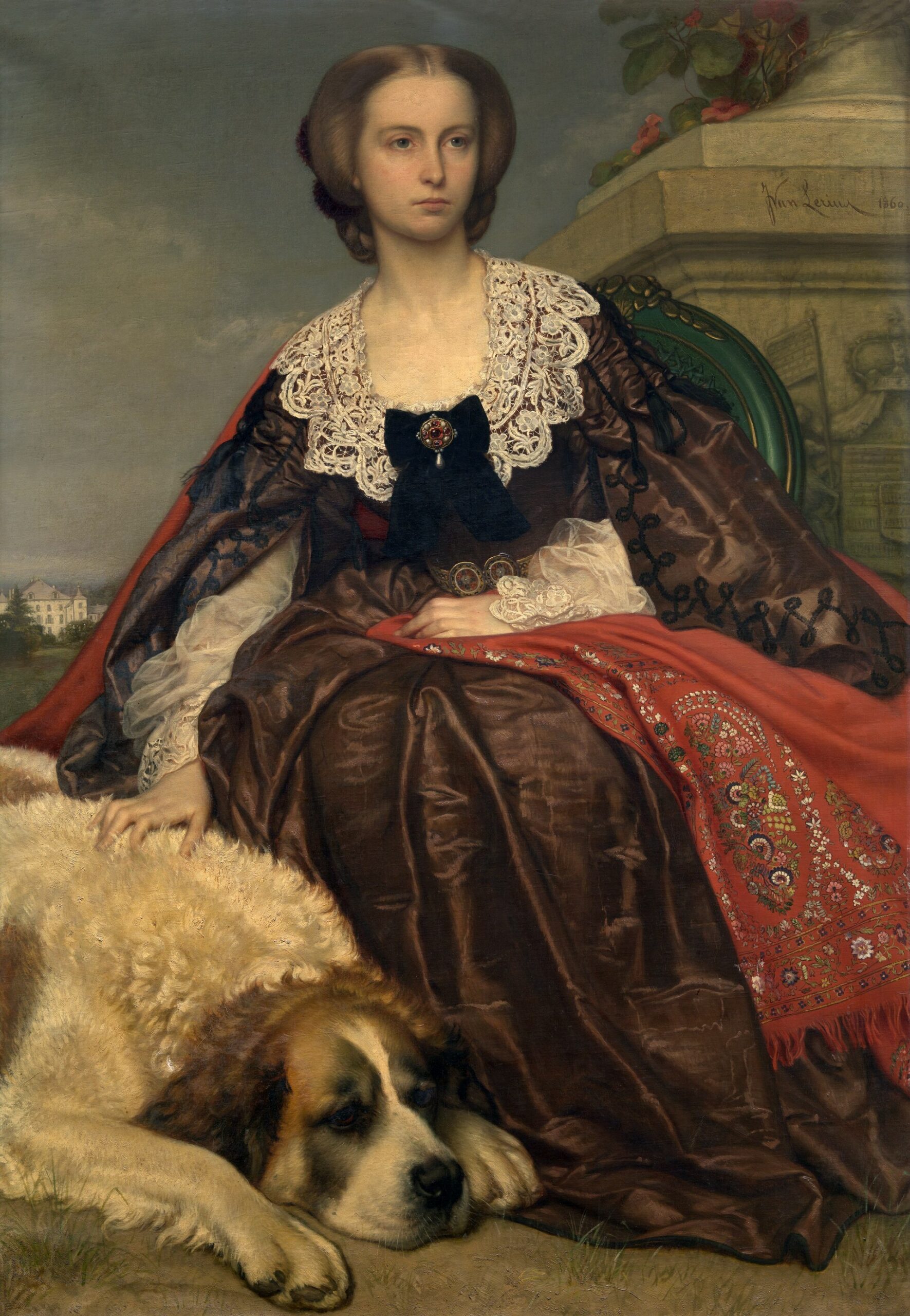
Portrait of Princess Herminie de Looz et Corswarem by Jozef Van Lerius, 1860
The House of de Looz-Corswarem is famously linked to two major global lineages. First, through an early marriage to the House of de Lannoy, they connected with a family that is now part of the reigning Grand Ducal Family of Luxembourg. Second, they formed an extraordinary South American alliance when in 1826, Princess Caroline-Arnoldine married José de la Riva-Agüero, the very first President of Peru. Their son, born and educated in Belgium, later became Peru’’s Minister of Foreign Affairs, bridging the political and aristocratic worlds of both nations.
Ursel
The surname d’Ursel originated in Germany as a nickname derived from the Latin ursus, meaning “bear.” The modern Belgian noble family actually began as the Schetz lineage, a highly successful family of German merchants and financiers in 15th-century Antwerp. They transitioned from the business world into the landed aristocracy when Conrad Schetz was adopted by his maternal aunt, Barbe van Ursel, taking her ancient knightly surname and coat of arms. In 1716, the family’’s status skyrocketed when Conrad-Albert d’Ursel was named Duke of Ursel and Hoboken by Holy Roman Emperor Charles VI.
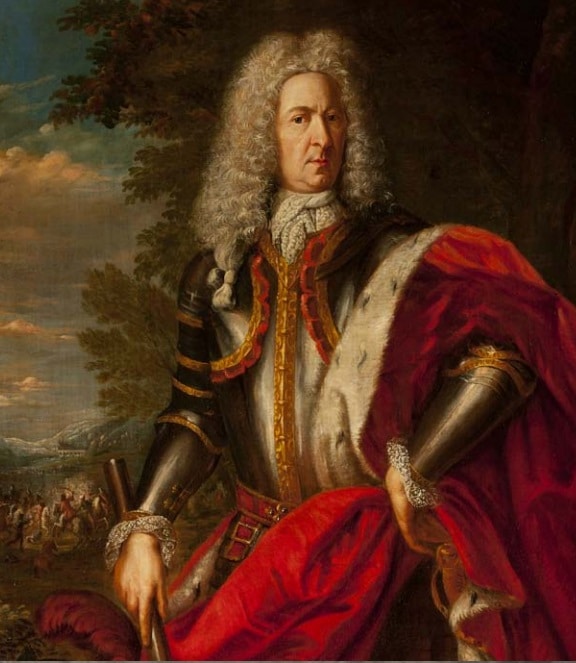
Conrad-Albert d’Ursel, the first Duke of Ursel
The House d’Ursel went on to secure highly prestigious marriages across Europe’s elite networks. Through historical ties and a marriage to the House of de Lannoy, they are directly connected to the reigning Grand Ducal Family of Luxembourg. The family expanded its reach into France and Germany: in 1923, Henri, 8th Duke d’Ursel, married Princess Antoinette de La Trémoïlle, uniting them with one of France’’s premier noble houses, while in 2012, Count Thibault d’Ursel married into the German princely house of Hohenlohe-Langenburg.
Arschot Schoonhoven
The surname d’Arschot Schoonhoven is a composite toponymic name originating from the Duchy of Brabant. “Arschot” (or Aarschot) is derived from the Belgian city of Aarschot, etymologically meaning “eagle’s’’s wood” or “border wood.” This is paired with “Schoonhoven,” meaning “beautiful estate,” referencing one of their historic lordships. Formally recognized in the Belgian nobility with the title of Count, members of this ancient house traditionally served in the immediate households of the Belgian monarchs.
The family’’s most famous alliance connects them directly to major European imperial history through a marriage into the non-reigning House of Habsburg-Lorraine and the Princely House of Windisch-Graetz. Countess Ghislaine d’Arschot Schoonhoven married Prince Franz Josef of Windisch-Graetz. Because Franz Josef was the son of Archduchess Elisabeth Marie of Austria (the “Red Archduchess”) and the grandson of Crown Prince Rudolf, this marriage directly tied the d’Arschot Schoonhoven family to the bloodlines of both Emperor Franz Joseph I of Austria and King Leopold II of Belgium.
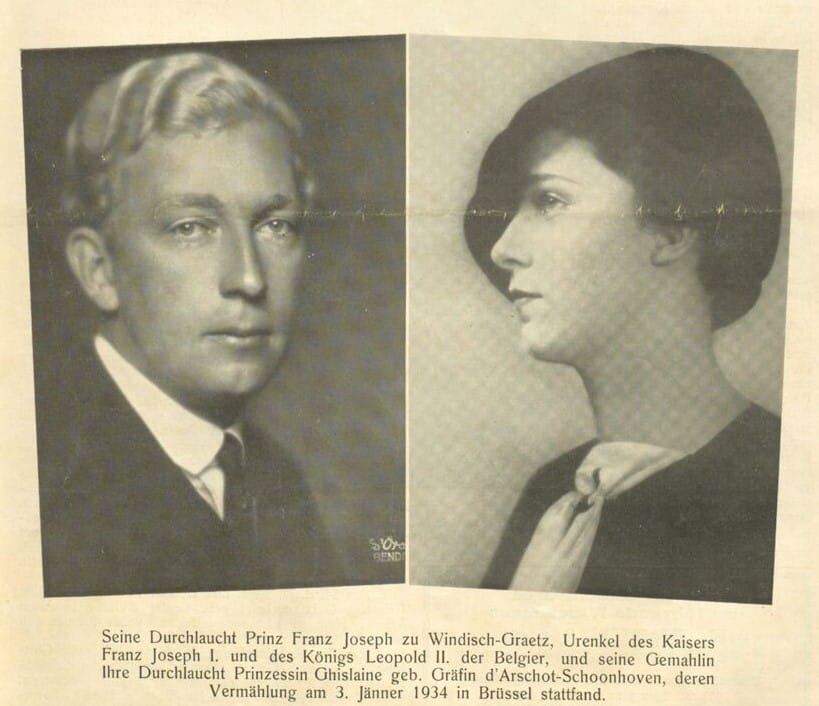
Photographs of Prince Granz Joseph zu Windisch-Graetz and his wife, Countess Ghislaine d’Arschoot Schoonhoven
Meeûs
The surname Meeûs is a Belgian family name deeply connected to the birth of modern Belgium. Linguistically, it is a patronymic name coming from the given name Bartholomeus (shortened to Meus). Originally a prominent merchant and banking family within the Brussels middle class, the Meeûs family massively grew their fortune after Belgian independence by buying up large portions of the Sonian Forest, which the new government had seized from the Dutch King William I.
The family officially joined the aristocracy in 1836 when King Leopold I granted Ferdinand de Meeûs the title of Count.
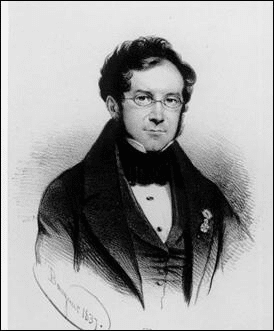
Ferdinand Meeûs
Upon his ennoblement, Ferdinand revived a historic coat of arms originally granted in 1688 by King Charles II of Spain to a military officer in the family. After acquiring the famous Argenteuil estate near Waterloo, certain branches of the family were later authorized by royal decree to expand their name, cementing the Meeûs legacy as a cornerstone of Belgian high society and financial history.
Are there any royal surnames in your own family? Explore the origins of your last name at MyHeritage.com.
Comments
No comments yet. Be the first!